Tour Overview
Step into the timeless realm of Sino-Tibetan UNESCO heritage, wander the sacred monastic universe of Tibetan Buddhism, and stand upon the Roof of the World. This immersive 10-day odyssey unveils the raw, soul-stirring landscapes of the Qinghai-Tibet Plateau. Trace ancient faith at revered monasteries, gaze upon the snow-capped crown of Mount Everest, and embrace the plateau’s ethereal, one-of-a-kind wilderness.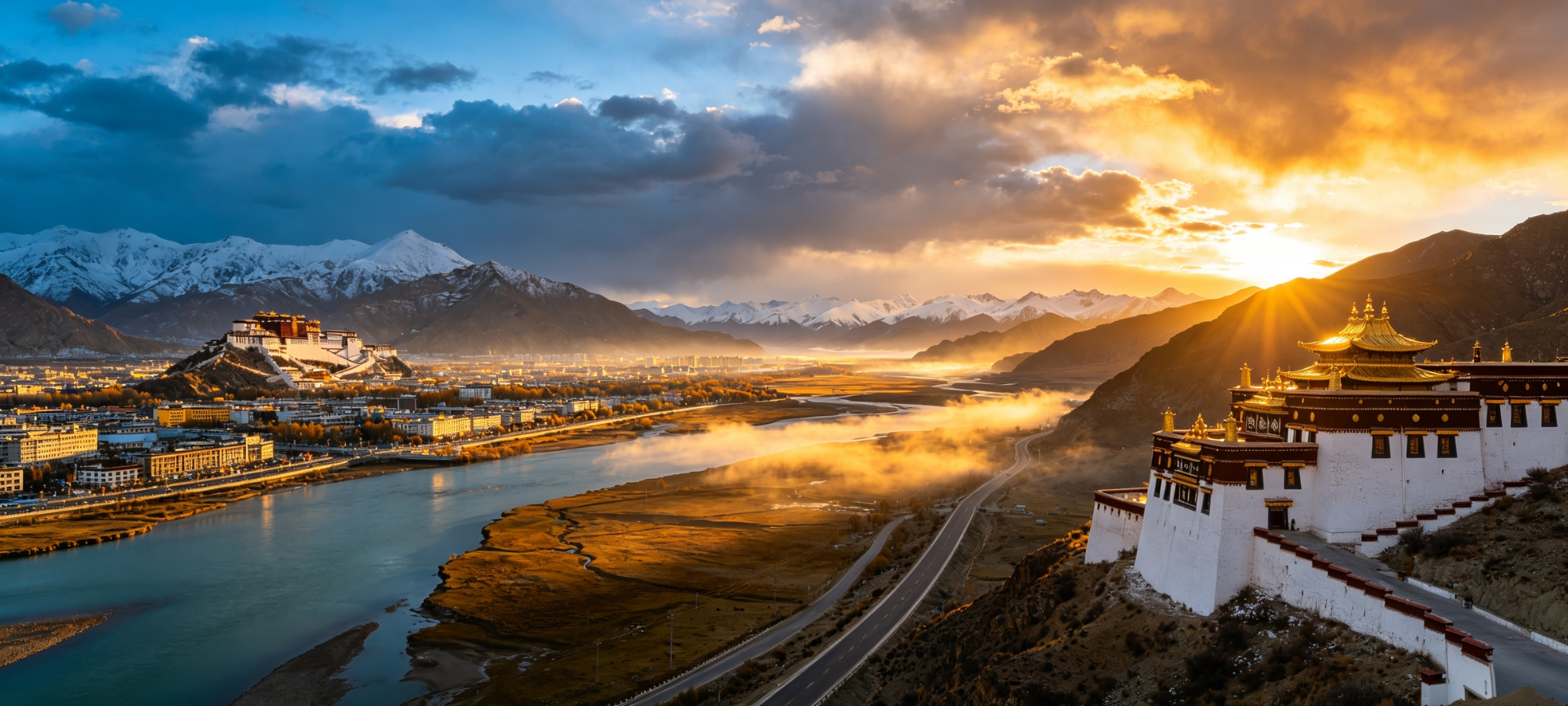
Highlights
Detailed Itinerary
Transfer to your hotel for check-in. No intensive sightseeing is arranged, full rest for high-altitude acclimatization. Lhasa sits at 3600 meters above sea level. Gentle rest effectively relieves altitude adaptation pressure. You may freely explore the quiet plateau city atmosphere and reserve physical strength for upcoming profound Tibet exploration.
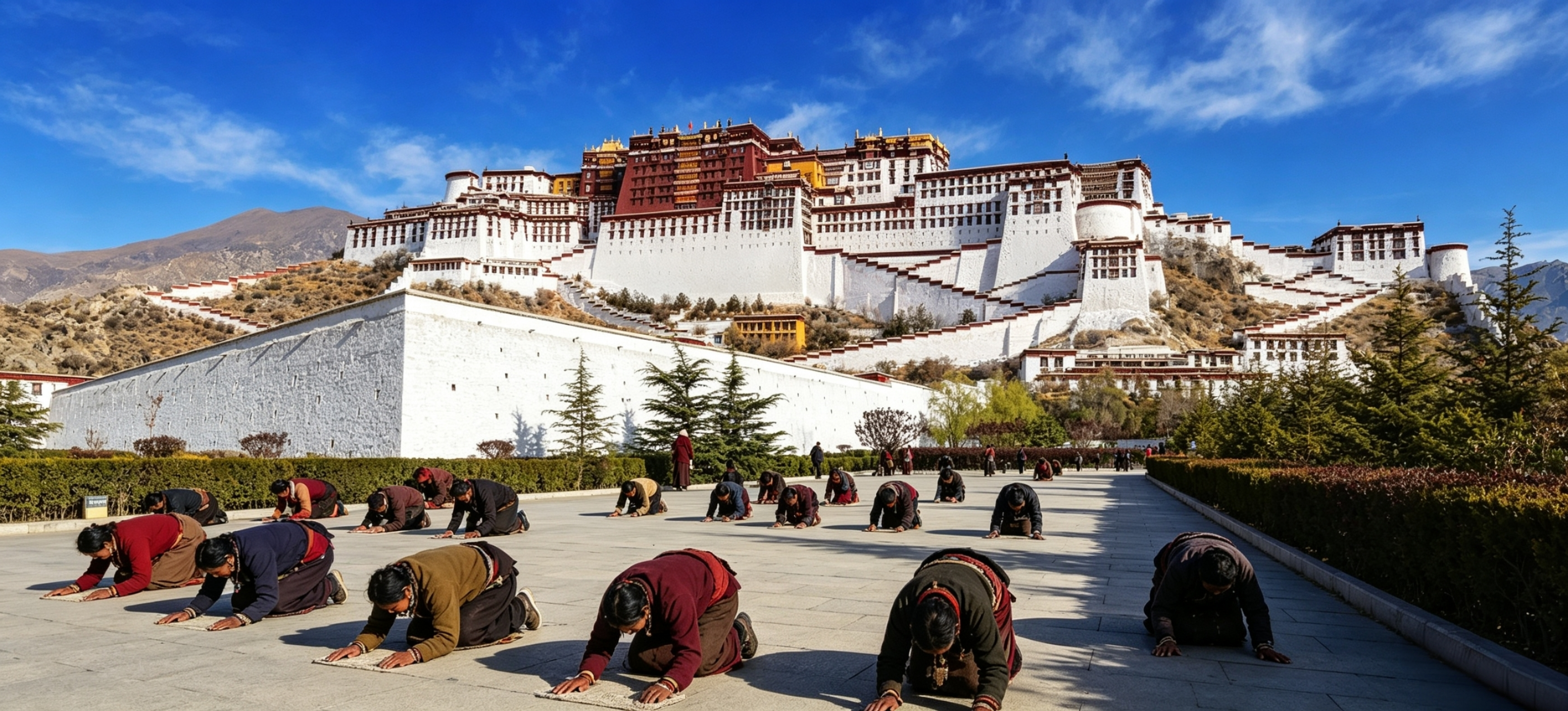
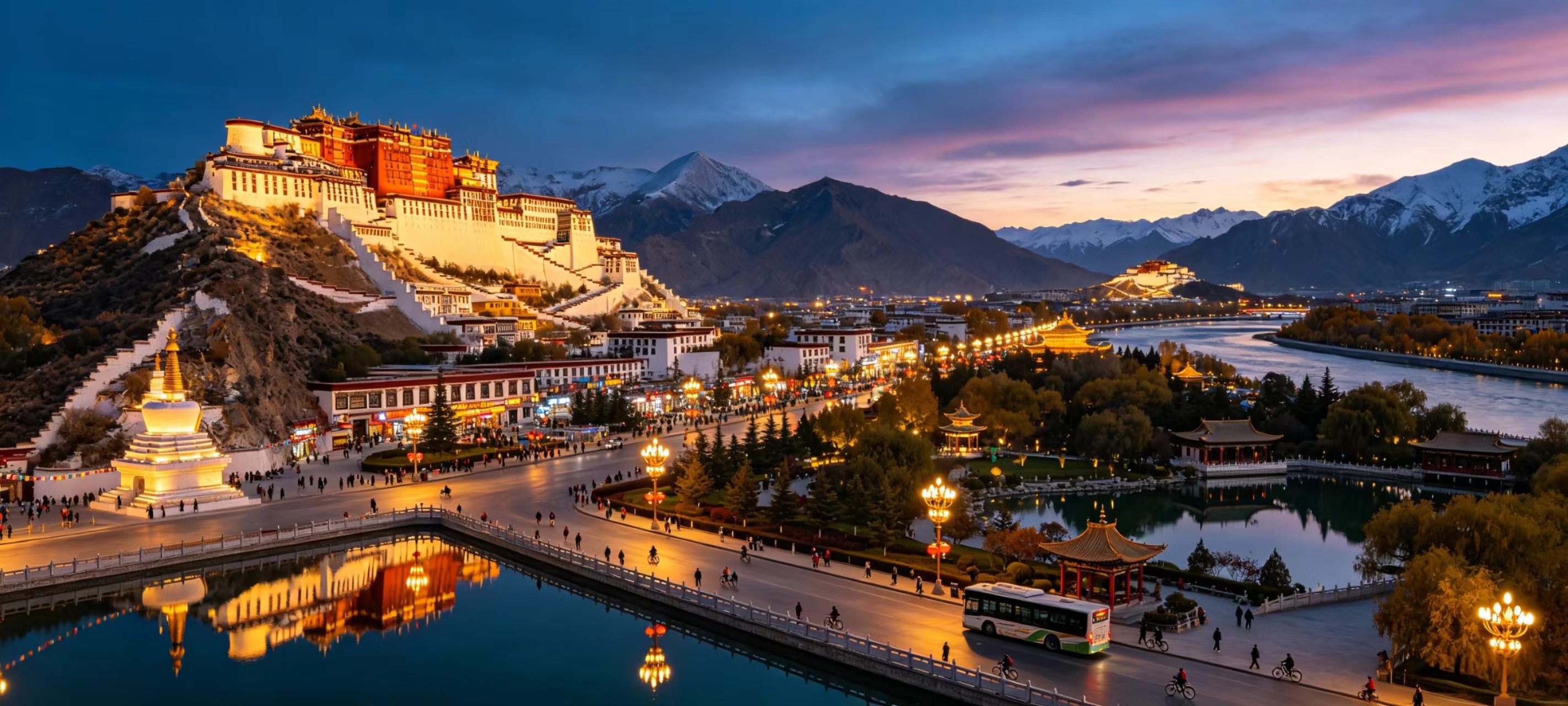
Explore the monumental Potala Palace and spiritually charged Jokhang Temple, wander the pilgrim-laden Barkhor Street, then enjoy an auth entic Tibetan dinner at dusk.
Highlights & Spot
Detail Potala Palace: A peerless UNESCO World Heritage Site, the supreme masterpiece of Han-Tibetan architectural fusion. Perched dramatically on Red Hill at 3700m, the 13-storey stone-timber complex was engineered to withstand brutal plateau winds, freezing winters and seismic shifts. It houses thousands of gilded Buddha statues, jewel-encrusted stupas, hand-painted murals spanning centuries, and irreplaceable royal and Buddhist relics. No other building on earth encapsulates Tibet's royal and religious legacy quite like it.
Jokhang Temple: The beating spiritual heart of Tibetan Buddhism. Founded in the 7th century, it ingeniously merges Tang dynasty Chinese timber frameworks, Nepalese sculptural art and Tibetan stonework. Its central sacred Buddha statue draws endless devout pilgrims who travel thousands of kilometres to prostrate before it. This is where Tibetan Buddhism's pilgrim tradition was born.
Barkhor Street: The ancient circular pilgrimage corridor encircling Jokhang Temple. Unlike other commercial tourist streets, Barkhor still functions as a living sacred circuit. Devotees continuously circle clockwise, spinning hand-held prayer wheels and murmuring mantras. Local vendors sell handcrafted prayer beads, amulets and traditional textiles, offering an unfiltered glimpse of daily Tibetan spiritual life.
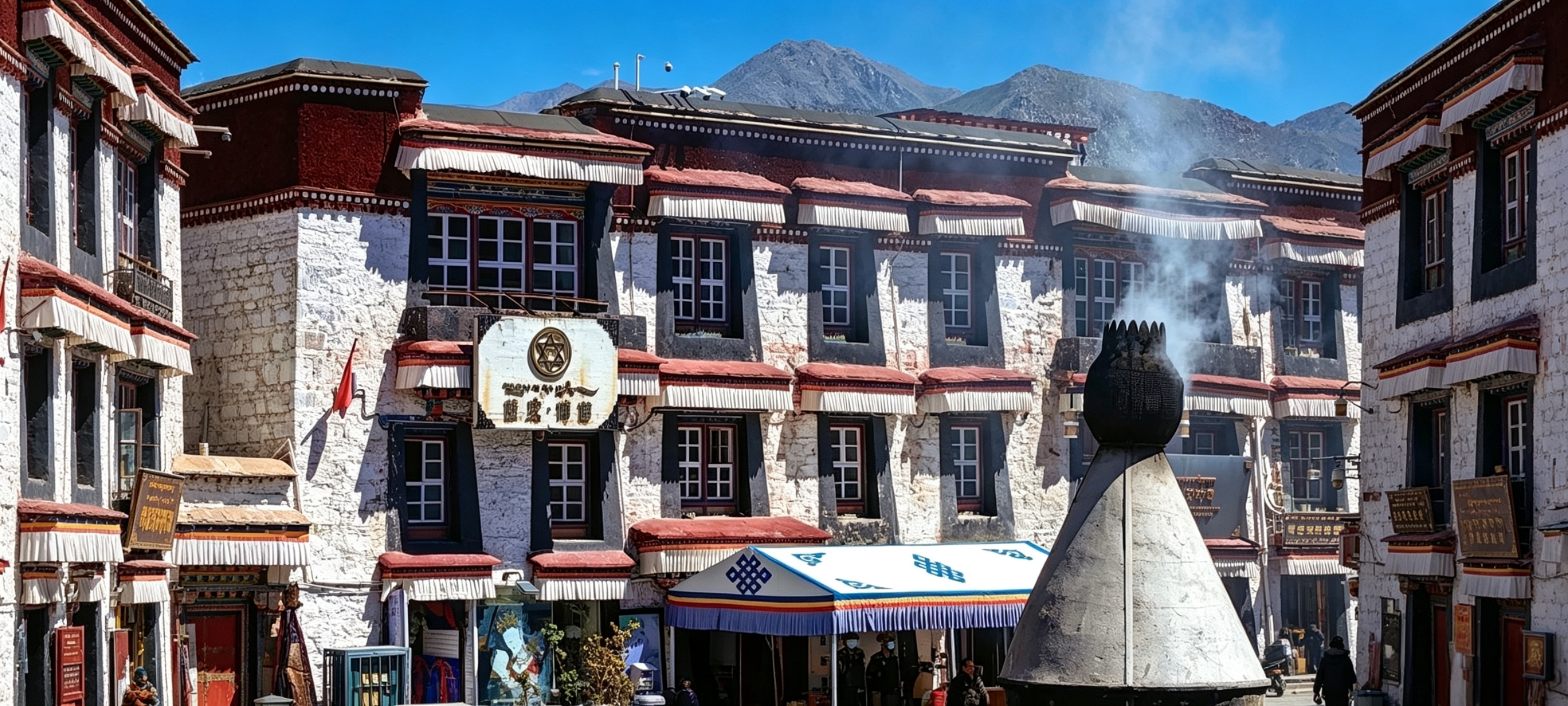
Visit two of Tibet's great Gelug monasteries.Explore sprawling Drepung Monastery in the morning, then head to Sera Monastery in the afternoon to witness the iconic, dynamic monk scripture debate.
Highlight & Spot Detail
Drepung Monastery founded in 1416, once the world's largest Buddhist monastery, home to over 10,000 monks at its peak. Its whitewashed buildings cascade down the mountain slope, blending Han roof details and massive Tibetan stone retaining walls to adapt to steep terrain. The Ganden Palace here served as the Dalai Lama's primary residence before the Potala Palace was constructed.
Sera Monastery established in 1419, famous worldwide for its afternoon monk debates, a living tradition rarely seen elsewhere. Monks gather in the shaded courtyard, using sharp claps, expressive gestures and rapid philosophical arguments to test their understanding of Buddhist doctrine. This is not a performance; it is an active, daily practice of Tibetan Buddhist education, vivid and utterly unique.
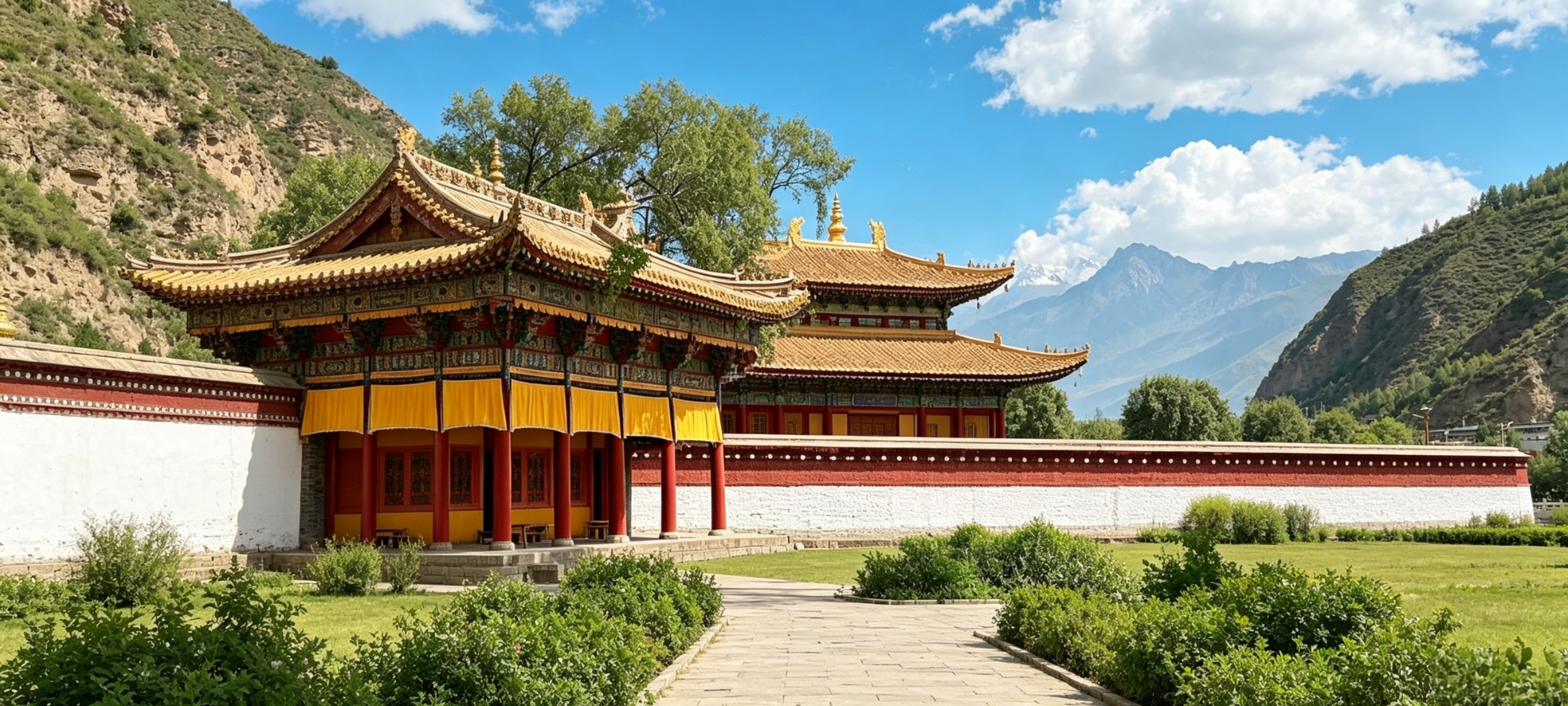
Cross Gampala Pass for sweeping views of Yamdrok Holy Lake, visit Pelkor Monastery and Gyantse Kumbum Stupa, then continue onward to Shigatse, the cultural hub of rear Tibet.
Highlight & Spot Detail
Yamdrok Lake sitting at 4400 meters, one of Tibet's three great holy lakes, revered by locals as the life-giving turquoise goddess of the plateau. Its winding, branching shoreline stretches endlessly beneath snow-capped summits. The lake's water colour shifts dramatically with sunlight and cloud cover, ranging from deep sapphire to mint turquoise. Few landscapes on the plateau match its ethereal, ever-changing beauty.
Pelkor Monastery & Gyantse Kumbum Stupa: A one-of-a-kind religious complex, the only site in Tibet that unites three major Tibetan Buddhist sects within a single compound. The multi-tiered Kumbum Stupa is called the "100,000 Buddha Stupa", its walls embedded with tens of thousands of tiny Buddha sculptures. The stupa's layered design incorporates Han decorative motifs alongside Tibetan and Nepalese artistic styles, a rare fusion masterpiece.
Shigatse is Tibet's second-largest city and the historic capital of Tsang region. It carries a distinct cultural identity different from Lhasa, and serves as the gateway to Everest. The city preserves old Tibetan residential quarters, traditional markets and deep-rooted monastic traditions.
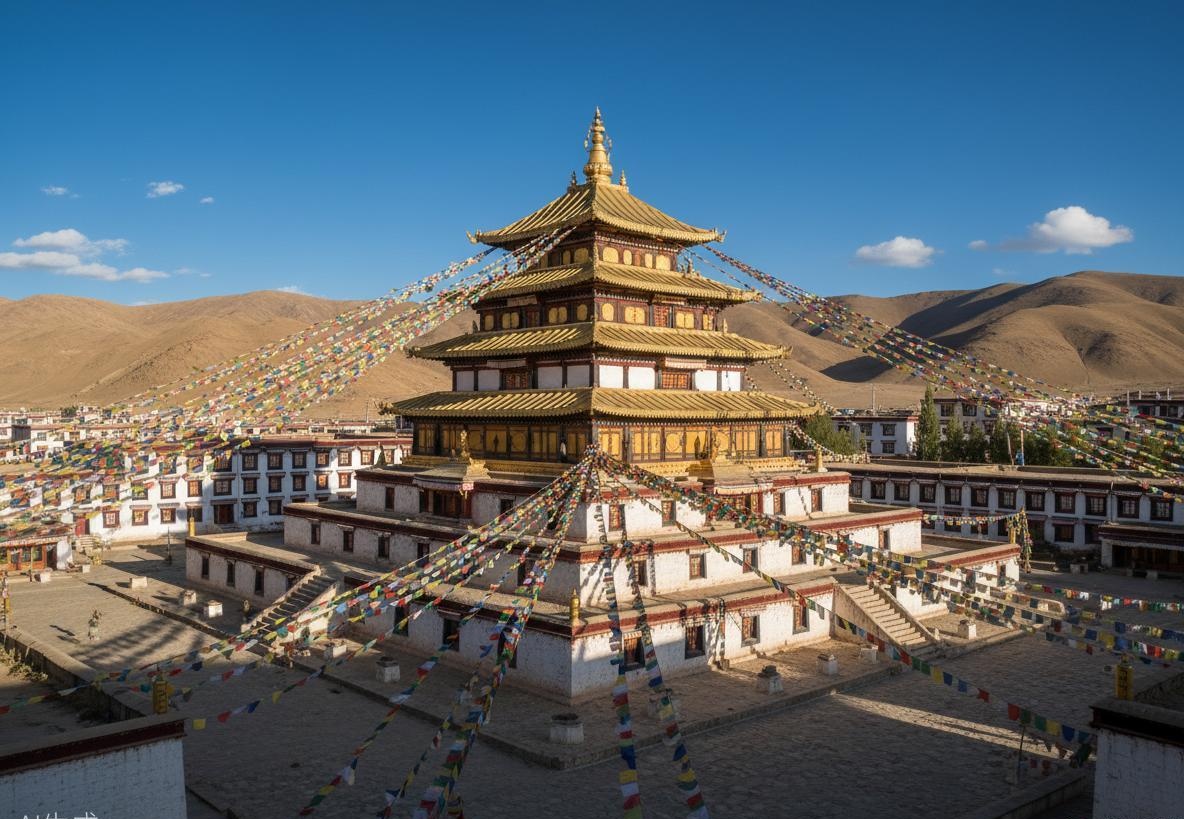
Stop in Lhatse for lunch, pass through Shegar town, cross Pang La Pass at 5050 meters, and arrive at Rongbuk Monastery, closest to Everest Base Camp.
Highlight & Spot Detail
Pang La Pass is one of Tibet's most spectacular high mountain passes at 5050m. Standing at this windswept ridge, a staggering panorama unfolds five of the world's highest peaks line up across the horizon, including Everest, Lhotse and Makalu. This unobstructed 360° mountain view is unmatched across the world. Rongbuk Monastery: The highest monastery on Earth, nestled at the foot of Mount Everest, built from local plateau stone to withstand extreme cold and gale-force winds. It holds the most direct, unobstructed viewpoint toward Everest's northern face. Isolated from populated areas, it retains a quiet, otherworldly spiritual atmosphere you will find nowhere else near the mountain.
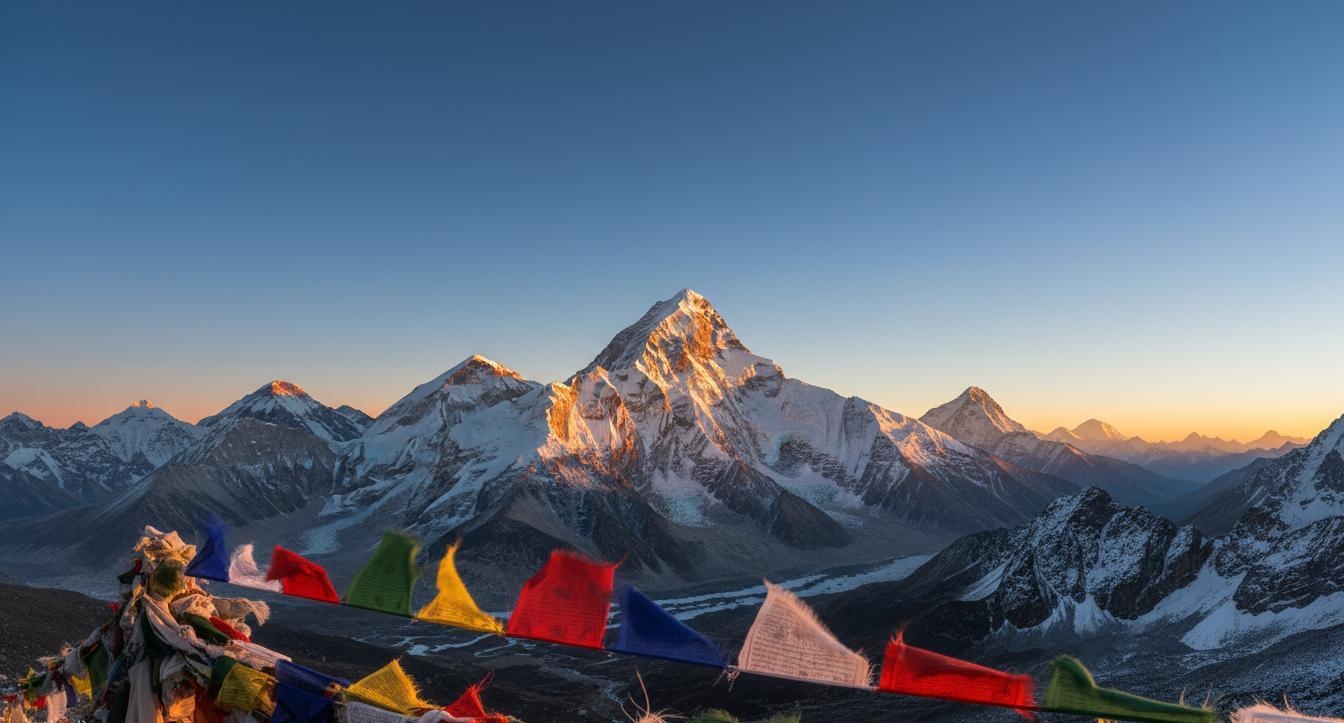
Explore the viewing platform beside Rongbuk Monastery, capture unforgettable mountain photos, then drive back to Shigatse.
Highlight & Spot Detail
Mount Everest Sunrise is a crown jewel of the trip. Before sunrise, Everest's peak remains cold pale blue rock and snow. When the first ray of sunlight touches the summit, the snow cap ignites into glowing molten gold. This magical golden moment lasts only a few minutes, a fleeting, transcendent natural spectacle. The surrounding highland steppe is home to rare plateau wildlife including Tibetan antelopes and blue sheep, adapted to this extreme alpine ecosystem.
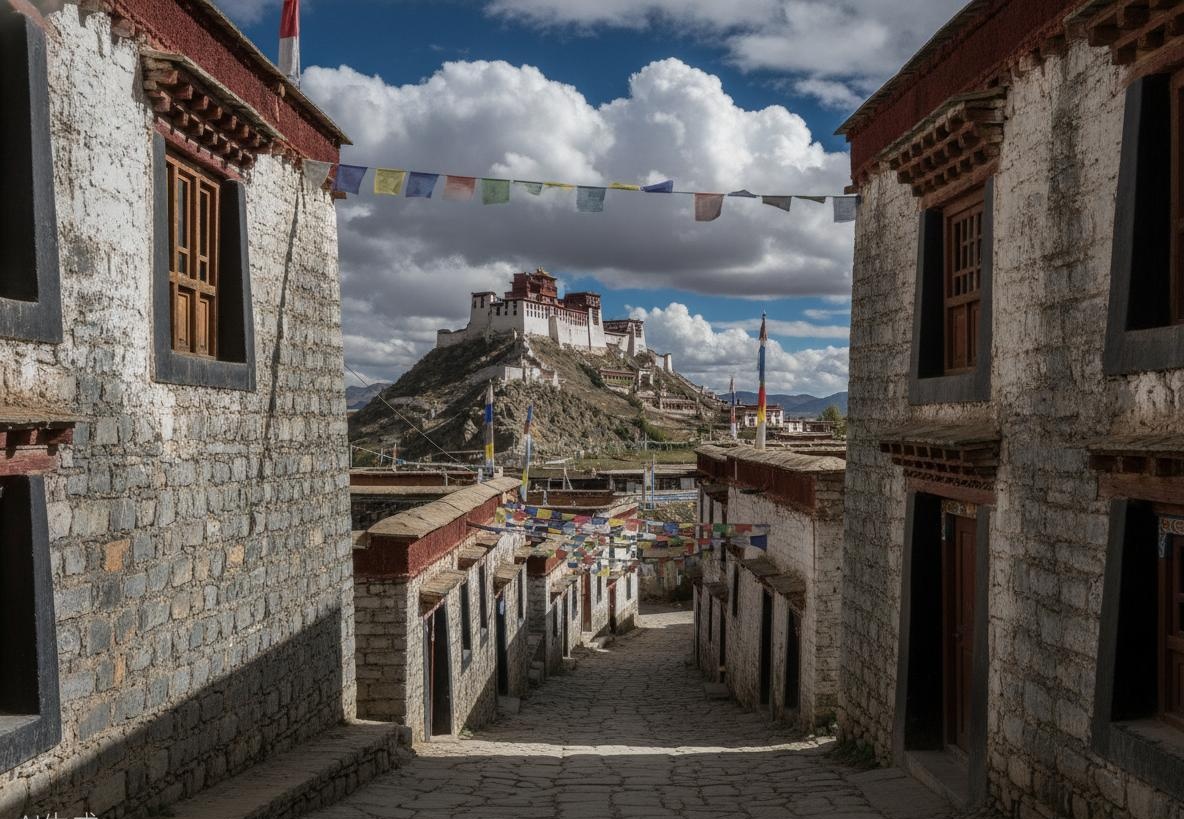
Admire its colossal Maitreya Buddha statue and sacred Panchen Lama tombs, then journey back to Lhasa in the afternoon.
Highlight &Spot Detail
Tashilhunpo Monastery was founded in 1447, the eternal spiritual seat of the Panchen Lama. The sprawling hillside complex integrates Han-style upturned roof eaves and massive Tibetan stone walls, carefully built to follow the natural contour of the land. It houses the world's largest gilded Maitreya Buddha statue, standing 26 metres tall, plus jewel-adorned tombs of past Panchen Lamas filled with gold, pearls and precious relics, a treasure trove of Tsang-region Buddhist art.
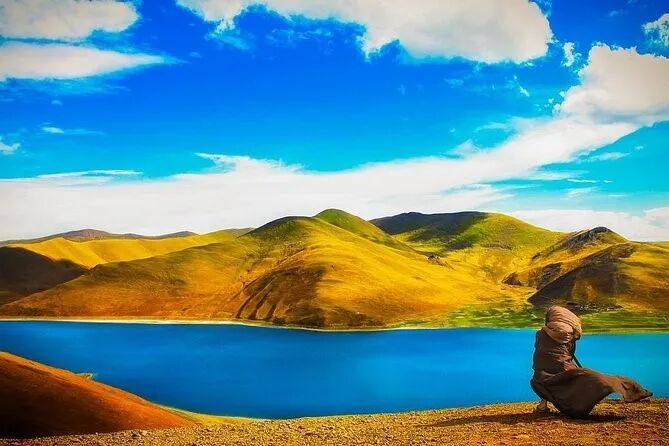
Along the way, admire the snow-capped Nyenchen Thanglha mountain range and nomadic pastures dotted with grazing yaks and sheep. Explore lakeside shores and Tashi Island, and stay overnight to behold the magnificent plateau night sky.
Highlight & Spot Detail
Namtso Lake known as Heavenly Lake, one of Tibet's four sacred lakes, a high-altitude salt lake lying at 4718 meters. The vivid azure water directly abuts the snow-capped Nyenchen Thanglha massif, creating a surreal mirror effect. The vast alpine grassland around the lake supports traditional nomadic herding, a lifestyle unchanged for centuries. At night, zero light pollution reveals a brilliant sea of stars, so dense you feel immersed inside the Milky Way, an experience impossible in lowland region
Walk to Tashi Dor Island to explore ancient meditation caves. Stop for lunch in Dumxung, then take an optional soak in Yangpachen hot springs before returning to Lhaavel north from Lhasa toward Namtso Lake. Along the way, admire the snow-capped Nyenchen Thanglha mountain range and nomadic pastures dotted with grazing yaks and sheep. Explore lakeside shores and Tashi Island, and stay overnight to behold the magnificent plateau night sky.
Highlight & Spot Detail
Morning light casts soft silver across Namtso's surface, perfectly reflecting Nyenchen Thanglha's snow ridges. Tashi Dor Island holds ancient meditation caves, where hermits once secluded themselves for decades of spiritual practice. Yangpachen's geothermal hot springs rise naturally from the plateau crust; mineral-rich warm waters soothe the muscle fatigue accumulated from highland travel, a rare natural spa on the Roof of the World. amtso Lake known as Heavenly Lake, one of Tibet's four sacred lakes, a high-altitude salt lake lying at 4718 meters. The vivid azure water directly abuts the snow-capped Nyenchen Thanglha massif, creating a surreal mirror effect. The vast alpine grassland around the lake supports traditional nomadic herding, a lifestyle unchanged for centuries. At night, zero light pollution reveals a brilliant sea of stars, so dense you feel immersed inside the Milky Way, an experience impo
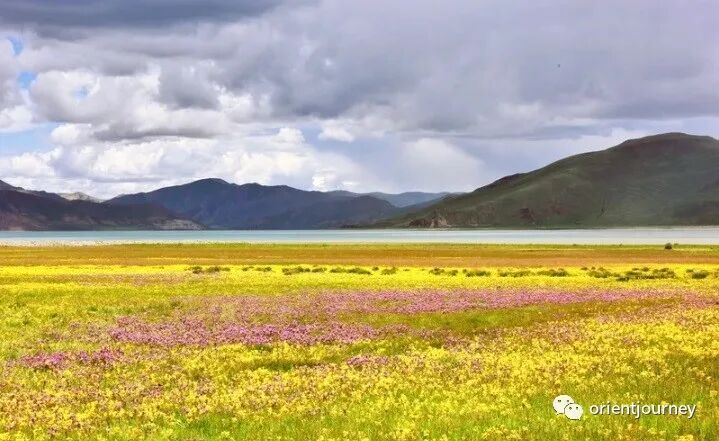
Carry memories of Everest sunrise, sacred lakes, ancient monasteries and glittering Namtso stars from this epic Tibet journey.